
Section A
Section B
From the Author's Pen
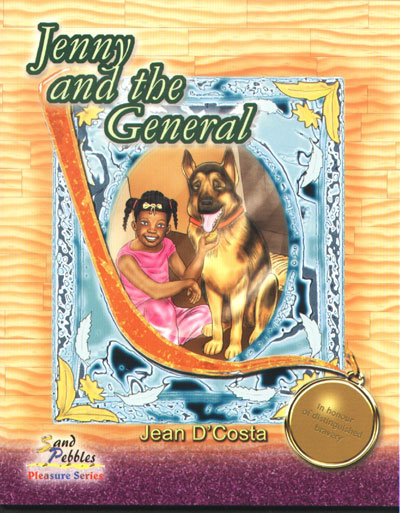
Jenny and the General tells the story of a little girl and her faithful dog. It is a story of strong friendship and devotion in the face of peril. Jenny’s world is based on my own childhood, when I roamed the hills around Somerton, St James, Jamaica, secure in the knowledge that my big Labrador-Alsatian dog, Sandy, was always nearby. If strangers came along the road, Sandy always appeared, as if by magic, and walked between me and the unknown people. He never growled; he didn’t have to, and he never bit anyone. No one would take a chance with him. He played lots of games with me, my sister, and my brother, and he could catch a ball in mid-air.
As World War II darkened our lives, Sandy helped us feel safe. He knew instinctively what we needed from him, and he knew the countryside all around for miles. He could find us wherever we went, hours after we had set out from home. He represents thousands of years of working friendship between humans and dogs, and the bonds continue to fit us together.
I was driven to write the story, however, by the inspiration of a human hero, Daddy Sharpe, whose wise and protective presence seemed to be with us in the hills of St James. When I tried to express the heroic spirit of that great leader, the idea of Jenny and her dog flooded my mind. So, in fact, the story is all about danger, self-sacrifice, determination, and pure love: those are the gifts handed me by the tales of our national hero, Sam Sharpe. They are hidden in Jenny and the General in the friendship of a child and her dog.
Setting
Jenny's home on Mason Road portrays my old home on Carpenter Road, Kingston 10, 70 years ago. We had mango, lime, breadfruit, coconut and orange trees; we had a small four-way intersection with two shops and a bar facing one another, and a very kind Chinese family running one of these businesses. We had the same friendly neighbours as Jenny does. Her school (Nelson Town Primary School) is based on my old, beloved Whitfield Town Elementary School.
In the 1940s and ‘50s, life was quiet and generally safe, but at times we children heard of criminals, of children disappearing, and of the dangers of trusting strangers. I am immensely grateful to my classmates who gave me explicit warnings of what dangers existed in Kingston. As a country girl in 1945, I needed their help. Grown-ups also warned us, but my schoolmates explained clearly what we children should never do: they told of the “black‐’art Man” (black‐hearted man), the dangerous adults who lure children with candy, or offer rides in cars, and other terrible dangers. They taught me how to sense danger and avoid it, so I was never as trusting as Jenny.
Jenny's world is that of suburban Kingston in the days of radio and TV, but before the Internet became common.
Time
Jenny and the General takes place over the course of one day in about 1994‐1995. We know the date because Jenny's grandfather recalls the action ‘fifty years ago’ (see page 7), when he took part in the invasion of Normandy in World War II. He names Monty after the British general who led the Allied forces at the famous D‐Day invasion of western Europe in June 1944. Field Marshal Montgomery led all the armies in Operation Overlord, under the direction of General Dwight D. Eisenhower. Many Jamaicans took part in World War II: as merchant seamen, members of the army, air force and navy, and as munitions workers, engineers, medical personnel and even as anti‐aircraft gunners in London.
Place
The action takes place in the suburbs of St Andrew, Jamaica, moving between the somewhat shabby housing estate where Jenny lives, along the main bus routes leading to the city and, at last, westwards towards the sea, where some of Kingston’s most desolate slums are found. Gullies snake their way through the Liguanea Plain toward the streets and housing developments of the parishes of Kingston and St Andrew. Monty, the dog, finds his way through this confusing landscape with instinctive skill.
Socio-economic conditions
The world of this story is that of Jamaica’s rising working class. Jenny’s parents are first- generation professionals. Their neighbours and friends have deep roots in the working class, and definite ambitions to rise and better themselves. The contrast between Jenny’s suburban home, shabby as it is, strikes the reader when Monty finds Jenny and her kidnapper in a slum made up of scratched-together housing on captured lands. Here, Alice MacFarlane’s bright, neat, strongly built cottage states openly that she has lived there longer than anyone else, that she probably owns her land and that she is noticeably superior in financial status or background to her squatting neighbours. She does not fit in there at all. Her old-fashioned furniture emphasizes how odd and out of place she is, and helps to suggest that her mental trouble is deep and longstanding.
Weather
Jamaica’s tropical weather allows people to wear light clothing, and to be out and about at all times of the year. Temperatures range from 22°˚C (72°˚F) to 31°˚C (88°˚F), often going over 32°˚C (90°˚F).
Geographic conditions
These are the standard features of a tropical island where the land rises towards a central range of mountains. Kingston has an excellent natural harbour, and sea breezes cool the areas adjacent to the coast. Jenny’s home stands at about 600 feet above sea level. The gullies used by Monty lead down to the sea, and can be dangerously flooded in times of heavy rain.
Plot Overview
The action begins when the old dog, Monty, senses that his beloved 10-year-old mistress is missing. Jenny and Monty have been together all their lives. Once he becomes certain that she is missing, and in trouble, the old dog sets off to find her on a journey through the backways, alleys and gullies of Kingston and St Andrew.
Monty has a few adventures as he follows his nose in search of his friend.
List of Characters
Jenny
Ten-year-old Jenny, the only child of her parents, is owner and best friend of a large dog, Monty, who is devoted to her. She is a bookish child, interested in reading. This interest helps the abductor to entrap her.
Monty
Monty is a 10-year-old half Labrador, half Alsatian dog who was given to Jenny by her grandfather when she was born.
Alice McFarlane
Alice McFarlane is the person who kidnapped Jenny.
Mr and Mrs Ellis
Mr and Mrs Ellis are Jenny’s parents. Mrs Ellis is a nurse, while Mr Ellis is an accountant.
Mr and Mrs Pennyfeather
Mr and Mrs Pennyfeather are the Ellises’ next-door neighbours.
Billy Chin
Billy Chin is the same age as Jenny. He is the son of the Chin family who own the grocery shop at the corner of Mason Road, where Jenny lives.
Mrs Chin
Mrs Chin is Billy’s mother. She is a close friend to the neighbours on Mason Road.
Mrs Thompson
Mrs Thompson is the headmistress of Jenny’s school.
Miss Della Ford
Miss Della Ford is Jenny’s teacher.
Analyses of Major and Minor Characters
Monty
The main character is the black and gold Alsatian dog, Monty, whose reliable and intelligent nature is established on the first pages. The action is seen mainly through his eyes. His observant, analytical nature is displayed in his clever descriptions of the characters introduced throughout the story. Monty is a domineering dog that manages to keep unwanted humans and canines away from the Ellises' home. He is aging, but still very committed to his best friend, Jenny, determined to keep her safe.
Monty opens the story by becoming worried about Jenny’s absence. Being very protective due to his nature and because of his closeness to Jenny, Monty is convinced that she is in danger and he sets off to find her. Note that his role is that of an intelligent canine: he behaves as the very best of his breed would do – analysing his neighbours and creatively communicating warnings, etc. His actions, instincts, and attitudes are the result of thousands of years of human-dog domestication, in which both sides have affected one another.
Jenny
Jenny is a playful, loyal and loving person in her relationship to Monty. She is a youthful, naïve child who respects authority. This is probably why she was caught in the old lady's trap.
Jenny's attachment to Monty reveals how dog/human relationships work. Their bond is similar to the family bond between siblings. She trusts him completely as he rescues and leads her home.
We do not hear much from Jenny herself, for the action is streamed through her protector, Monty.
Mr and Mrs Ellis
Mr and Mrs Ellis, Jenny's parents, reflect more of her character. They are down‐to‐earth, educated and very loving people.
Mrs Pennyfeather
Mrs Pennyfeather is a fussy, melodramatic person who loves excitement. Monty’s comments on her behaviour illustrate her silliness, but she is also loyal and kind.
Mr Pennyfeather
Mr Pennyfeather is a vague figure known mainly for coming home eager for his dinner.
Mrs Thompson, Miss Ford, Mrs Chin are all standard authority figures who frame the lives of the children.
Alice McFarlane
Alice McFarlane, Jenny's abductor, is an intelligent, lonely, mentally disturbed woman whose only daughter died many years ago, at about the age of 10. She has had episodes of delusion in which she believes that her daughter is still alive. Jenny reminds her of her daughter, and her friendliness makes Jenny trust her.
Alice is seen through Monty's eyes instead of Jenny's. This approach removes some of Jenny's raw terror from the reader and puts it at a somewhat safer distance. Alice's tragedy and insanity are acted out in front of Jenny, making her even more terrified.
Point of View
The main, limited point of view is deliberately set in that of a non-human, the dog Monty, who is the hero of the story. This device allows for humour at the expense of humans and for comments on human behaviour that would not otherwise be possible.
It removes the actual persuasion and imprisonment of the girl-heroine from the reader’s eyes, veiling the actual abduction itself and concealing Alice McFarlane until the climax of the story.
We feel Jenny's terror through Monty, not first-hand through the girl herself, and we do not discover anything that Monty could not know for himself.
Themes
Loyalty and Heroism
Loyalty lies at the centre of the story and is at the core of Monty’s character. It is that quality that drives Monty’s determination and resulting action. His loyalty towards Jenny fuels his determination toward and persistence in his heroic saving act – finding Jenny, then leaping through the window in a desperate attempt to rescue her. All his physical courage was displayed despite his ageing, unfed and tired body.
Love
All the characters, even Alice McFarlane, display varying kinds of loyalty and love.
Jenny and Monty show clearly the love between a pet and his owner through Monty's lifetime of interaction with Jenny, even to the very end of the story.
Familial love between Jenny and her parents is evident in their concern for Jenny's well‐being. Familial love was also at the root of Jenny’s predicament as it was Alice's loss of love that helped to unhinge her mind and caused her to abduct Jenny.
The community members, in how they gathered to celebrate Jenny’s return, also show a great deal of love for their neighbour.
Motifs and/or Symbols
Monty the faithful dog is the main symbol of loyalty, heroism and love. Other dogs also appear, demonstrating their part in human life and in the life of the planet.
Summary and Analysis of Story
Monty, an old half Alsatian, half Labrador dog, senses one afternoon that his human friend, Jenny, is not coming home from school as she usually does. He becomes anxious and troubled. After a while, he breaks loose and goes in search of her. He covers many miles from home, through unknown territory, and by nightfall his sixth sense tells him that she is held prisoner, and is terrified.
While her parents, neighbours, and teachers begin to search uselessly for Jenny, Monty keeps on the trail, guided by canine instincts. Late at night, he tracks her to the cottage where she is being held prisoner by a sad, deranged woman who wants to make Jenny take the place of her own, long dead daughter. She has bound Jenny's hands, feet, and mouth, so that Jenny cannot escape or, more importantly, tell her who she really is, and most of all, who she certainly is not.
Monty is fearful that Alice's insanity will cause her to hurt Jenny, so he makes a desperate leap through the window and terrifies Alice into running away. Then, he shepherds Jenny to his escape route and they walk the long miles home in the dark. He fulfils his role as her best friend and protector. The celebration that follows marks his success.

Questions and Activities
Multiple Choice Quizzes
Quiz 1
1 Why is this story called Jenny and the General?
2 How do you know the exact time when the story begins?
3 What is Mrs Pennyfeather cooking for dinner?
4 What does the Ellises' yard look like?
5 How does Monty identify the children passing his house?
Check
Quiz 2
1Who is General Montgomery?
2 How does Monty know that Jenny is missing?
3 How does Monty plan his search?
4 How does Monty leave a message for Jenny's parents?
5 How does Monty know where to start his search?
Check
Quiz 3
1 How does Monty find a drink of water for himself?
2 Where does Monty's journey take him?
3As he picks up the ‘fear smell’ from Jenny, what does Monty suddenly realize?
4Why does Monty dispose of his collar and the key?
5What natural feature of south Kingston has Monty never seen?
Check
Quiz 4
1How does Mrs Pennyfeather tell the bad news to Jenny's mother?
2 How does Jenny's mother react when she realizes her daughter is missing?
3 What do Jenny's parents do when they realize she is missing?
4 Where does the trail lead Monty?
5 How does Monty deal with the fence blocking his path?
Check
Quiz 5
1 What happens when he gets through the fence?
2 What does Monty see when he looks around?
3 Where does Monty find Jenny
4 What is Alice MacFarlane telling Jenny?
5 How does Monty get inside Alice's house?
Check
Quiz 6
1What happens to Alice when she faces Monty?
2 What is Monty afraid of when he watches Alice?
3 How does Jenny get free from the knots binding her in place?
4 How do Jenny and Monty find their way home?
5 What very important items does Monty retrieve on the way home?
Check
Short Answer Questions
- Which characters seem most real to you, and why?
- Choose for yourself the part of the story that scares you the most, and tell why.
- What connection can you see between the hero of this story, and our idea of a hero? How can a dog be considered heroic?
- Can you picture the scenes of this story in your mind? Why? Point out ONE description that you thought was good and ONE that you thought was not so good.
- On page 24, the writer uses a series of phrases that repeat the same message: Jenny is missing. Pick out the repetitions and say how these words make you feel.
How do they enhance the story?
Essay Questions
- From what you have read, what kind of girl is Jenny Ellis?
- Some people dislike dogs; others love them. What view do you have of dogs? How do you think we should we treat them?
- Jenny Ellis should never have let herself be abducted. What advice would you give Jenny and other children about talking to strangers?
- What part of this story surprised you most, and why?
- What do you most dislike about this story, and why?
Research Questions
- Many people have forgotten World War II. Find out what happened on D-Day in Europe, and why it was so important.
- What are your grandparents’ oldest memories? What sort of things do you wish they could remember?
- Do dogs take part in helping humans suffering from disabilities or illnesses? What kinds of help can a dog offer?
Activities
Activity 1
Play the part of a dog trying to track something (he or she may be on a farm, in a forest, a city or a huge building). Let your family or classmates guess
- what you are doing.
- which character you are playing.
Activity 2
Can you imagine where Jenny lived? Draw a map of her neighbourhood. Use the picture on page 17 to help you to get started. Be sure to indicate the following:
- The Ellises' home
- Mr and Mrs Pennyfeather's home
- The grocery store
- Where Jenny's school could be
- Where Billy Chin could live